What is hashing all about?
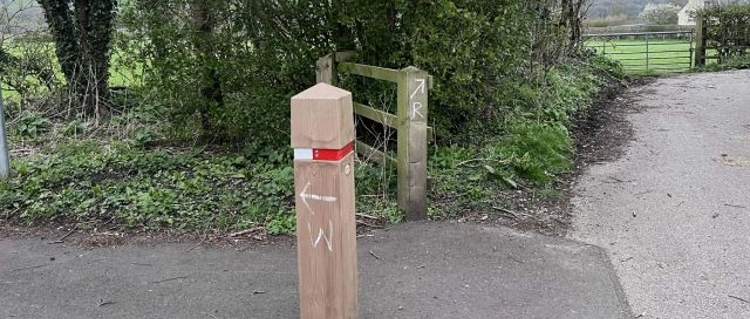
A hash is loosely based on the traditional paper chase but using bio-degradable chalk and flour markings. One or more members (Hares) lay a trail, which is then followed by the remainder of the group (the Pack or Hounds). The trail often includes false trails, short cuts, dead ends and splits. These features are designed to keep the pack together regardless of fitness level or running speed, as front-runners are forced to slow down to find the "true" trail, allowing stragglers to catch up.
There is usually a "beer stop" at some point during the r*n (we can't bring ourselves to actually write that word) where there will be water, soft drinks and beer. There may even be some biscuits to keep you going!
We name our splits "Rambo" and "Wimps". Generally, the rambo split is for people of a more athletic nature whilst the wimps is for those that want to take it easy. There's no shame either way - the only shame is not hashing in the first place!
Lune Valley H3 is a family hash and welcomes people of all ages and abilities. All we ask is that parents supervise their children. Hashing is non competitive and is a great way to stay fit, see some wonderful countryside and have fun!
If you'd like to join us afterwards in the On Inn (a local pub or restaurant), you will need some money.
To r*n, you need suitable clothing and footwear as it can get muddy and slippery. It is worth bringing a change of clothes and footwear that you can slip into after the r*n.
How did it start?
Hashing originated in December 1938 in Kuala Lumpur, Selangor, then in the Federated Malay States (now Malaysia). A group of British expats began meeting on Friday evenings, to run in a fashion patterned after the traditional British game of hare and hounds, in which one or two "hare" runners scatter a trail of cut paper for the "hounds" to track. Apart from the excitement of chasing the hare and finding the trail, Harriers reaching the end of the trail would partake of beer, ginger beer, and cigarettes. With hash names in parentheses, the original members included Albert Stephen Ignatius Gispert ("G"), Cecil Lee, Frederick Thomson ("Horse"), Ronald Bennett ("Torch"), Eric Galvin, H.M. Doig, and John Woodrow.
A. S. Gispert suggested the name "Hash House Harriers" after the Selangor Club Annex, known as the "Hash House", where several of the original hashers lived and dined. The "Hash House" got its name for "its hodgepodge of edible servings being passed off for food". The term hash was used as an old British slang for "bad food".
Hashing ceased after the Invasion of Malaya during World War II, but several of the original group restarted it in 1946, after the war, and switched to meeting on Monday evenings. A.S.I. Gispert had been killed on 11 February 1942, in the Japanese invasion of Singapore, an event commemorated by many chapters with an annual Gispert Memorial Run.
While attempting to reorganise in the city of Kuala Lumpur after World War II, hashers were informed by the Registrar of Societies that, since they were a "group", they would require a constitution. The objectives of the Hash House Harriers as recorded on the club registration card dated 1950 are:
- To promote physical fitness among our members
- To get rid of weekend hangovers
- To acquire a good thirst and to satisfy it in beer
- To persuade the older members that they are not as old as they feel
In 1962, Ian Cumming founded the second chapter in Singapore. Chapters are commonly called Kennels, following in tradition to similar Hound & Hare clubs. The idea spread through the Far East and the South Pacific, Europe, and North America, expanding rapidly during the mid-1970s.